
Resilience across contexts vs Parenting

Both "Resilience across contexts" by Margaret C. Wang, Ronald D. Taylor and "Parenting" by Tom Luster are popular choices for readers interested in Family and Families. This comparison helps you decide which to read first — or whether both belong on your list.

Shared Themes

FAMILY & RELATIONSHIPSSocial EnvironmentParentingFAMILY & RELATIONSHIPS
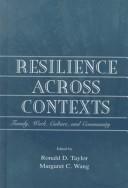
Cover of Resilience across contexts

Resilience across contexts

Margaret C. Wang, Ronald D. Taylor

2000

A number of societal risks pose serious challenges to families' well-being, many of which cut across divisions of class and race. These challenges include: changes in the labor market and economy; the increasing participation of mothers in the labor force; the changing nature of family structure and the composition of households; and the increase in the number of immigrant families. Key institutions in the lives of families, including places of employment and schools, can play a significant role in fostering families' capacity to adapt to the potential challenges they face. Resilience Across Contexts: Family, Work, Culture, and Communitypresents papers--written by leading scholars in varied disciplines including economics, developmental and educational psychology, education, and sociology--discussing factors that influence resilience development. The authors' research focuses on emerging issues that have significant implications for policy and practice in such areas as employment and new technologies; maternal employment and family development; family structure and family life; immigration, migration, acculturation, and education of children and youth; and social and human services delivery. The book's overall goal is to take stock of what is known from research and practice on some of the challenges facing children and families for policy development and improvement of practices.
Published 2000
Books like Resilience across contexts
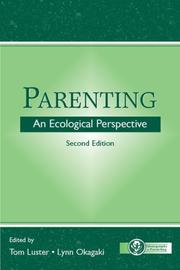
Cover of Parenting

Parenting

Tom Luster

2005

Parenting: An Ecological Perspective was originally created in 1993 to answer questions such as: Why do parents differ markedly in the ways in which they care for their children? What factors contribute to individual differences in parenting behavior? The framework used for addressing these questions is the ecological perspective developed by Urie Bronfenbrenner, who recognized that children's development is influenced by the interactions that they have over time with the people, objects, and symbols in their immediate environment. Luster and Okagaki have updated the original text focusing on parental behavior and also included 6 new chapters covering topics such as: *fathers/gender of parent; *children with special needs; *ethnicity and socioeconomic status; and *parent education. The text summarizes the latest research on factors that influence parenting, with each chapter providing a look at one important influence and the linkages among these various factors. An ecological perspective draws attention to the fact that the lives of parents and children are intertwined, and that understanding factors that influence parents is important for understanding the experiences of children.

Published 2005
Books like Parenting

Frequently Asked Questions

Which is easier to read: Resilience across contexts or Parenting?
Reading difficulty depends on your familiarity with the genre. Check each book's page count and subject matter above, and start with whichever aligns better with books you've enjoyed before.
Can I read Resilience across contexts and Parenting in any order?
Yes — these are standalone works. You don't need to read one before the other unless they're part of the same series.
Which book is better for beginners?
If you're new to this genre, look at the shorter book with broader appeal and start there. You can always come back for the other.

Are you an author? Promote your book or submit a free listing.

Affiliate Disclosure: As an Amazon Associate, we may earn from qualifying purchases. Book links on this page may be affiliate links. This does not affect our recommendations or the price you pay.