
Counseling addicted families vs Enduring change in eating disorders

Both "Counseling addicted families" by Gerald A. Juhnke and "Enduring change in eating disorders" by H. Charles Fishman are popular choices for readers interested in Counseling and Family Therapy. This comparison helps you decide which to read first — or whether both belong on your list.

Shared Themes

Family TherapyMethodsTherapyTreatmentTraitement
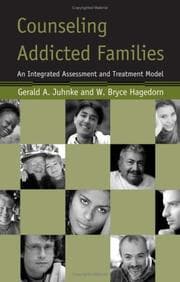
Cover of Counseling addicted families

Counseling addicted families

Gerald A. Juhnke

2006

Although one person's addiction almost inevitably affects his or her family members, a surprising number of treatment models appear to operate under the assumption that an individual's addiction occurs in a vacuum. By not paying sufficient attention to preexisting family dynamics-whether dysfunctional, supportive, or somewhere in between-counselors run the risk of not fully understanding the roots of an individual's addictions or the obstacles to his recovery; as a result, counselors may undermine their own treatment efforts both by neglecting any underlying family problems and by failing to capitalize upon a family's potential assistance in an intervention with the addicted individual. In Counseling Addicted Families, Gerald A. Juhnke and William Bryce Hagedorn address this problem head-on. Recognizing that even those treatment providers who understand the importance of the familial context of addiction are often stymied by the variety of family treatment theories and their often imperfect fit for cases of addiction, Juhnke and Hagedorn provide a truly integrated model for assessment and treatment. Based upon the authors' combined 23 years of experience in clinical and treatment supervision, the Integrated Family Addictions Model consists of six progressive treatment tiers which organize the relevant family treatment theories into a graduated and coherent sequence, beginning with the briefest and least costly forms of therapy. If one of the lower tiers allows clients to reach their treatment goals, the patient and therapist need not waste time and resources following the full continuum. If, however, their needs are still unmet, they can progress in a logical fashion to more advanced and intensive forms of therapy. The book is divided into three broad topic areas designed to provide counselors and graduate students with essential information both about addictions and about the practical applications of various treatment theories. Part One discusses the prevalence of
Published 2006
Books like Counseling addicted families
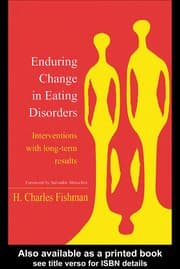
Cover of Enduring change in eating disorders

Enduring change in eating disorders

H. Charles Fishman

2004

Enduring Change in Eating Disorders provides a unique perspective on the successful treatment of eating disorders, which are among the most debilitating and recalcitrant psychiatric diseases. Unique in the field, this book details effective Structural Family Therapy with qualitative follow-ups of up to 20 years. A practical approach providing concrete tools to the clinician to creating change that holds over time with bulimia, anorexia, and compulsive overeating. The text draws on cases from the author's practice of over twenty-five years and follows his approach in the theoretical tradition of Intensive Structural Family Therapy (IST). Chapters discuss the nature and significance of eating disorders, a review of current treatment approaches, and the importance of the family in the therapeutic process. Cases of eating disorders in youths and adults are provided as well as instances of bulimia, anorexia, and compulsive overeating. Three appendices provide the reader with information regarding the scientific basis of the IST model, the effectiveness of the approach in treating conditions other than eating disorders and preventing eating disorders.

Published 2004
Books like Enduring change in eating disorders

Frequently Asked Questions

Which is easier to read: Counseling addicted families or Enduring change in eating disorders?
Reading difficulty depends on your familiarity with the genre. Check each book's page count and subject matter above, and start with whichever aligns better with books you've enjoyed before.
Can I read Counseling addicted families and Enduring change in eating disorders in any order?
Yes — these are standalone works. You don't need to read one before the other unless they're part of the same series.
Which book is better for beginners?
If you're new to this genre, look at the shorter book with broader appeal and start there. You can always come back for the other.

Are you an author? Promote your book or submit a free listing.

Affiliate Disclosure: As an Amazon Associate, we may earn from qualifying purchases. Book links on this page may be affiliate links. This does not affect our recommendations or the price you pay.