
Concerning children vs Your child at play

Both "Your child at play" by Marilyn M. Segal and "Concerning children" by Charlotte Perkins Gilman, Jon A. Lindseth Suffrage Collection, Rationalist Press Association are popular choices for readers interested in Child development and Creative activities and seat work. This comparison helps you decide which to read first — or whether both belong on your list.

Shared Themes

Child rearingChildrenParentingFamily & Relationships
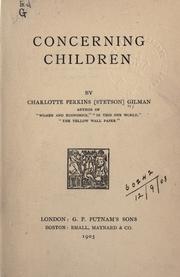
Cover of Concerning children

Concerning children

Charlotte Perkins Gilman, Jon A. Lindseth Suffrage Collection, Rationalist Press Association

1900

Charlotte Perkins Gilman's Concerning Children reflects her innovative thinking on the social and economic construction of motherhood. In this volume, she takes on American society at its core principles: the betterment of our society through the development of our children. Gilman attacks our conventional model of child rearing, one based on obedience and discipline, rather than on the development of creativity and individuality. She responds to popular practices such as the corporal punishment of children, and proposes new and radical ways of child-rearing including social motherhood, which frees women to pursue careers. Presciently observing more than a century ago that it takes an entire village to raise a child, Gilman's Concerning Children is a must-read for anyone interested in gender and family studies.
Published 1900
Books like Concerning children
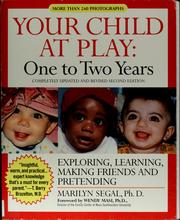
Cover of Your child at play

Your child at play

Marilyn M. Segal

1985

Packed with learning activities, games, poems, and recipes, as well as anecdotes and advice, the eight sections focus on: Individual Differences and Common Threads (distinguishing between real and pretend; concern with fairness; self-awareness) The Questions Children Ask (the physical world; the natural world; the social world) Friends (best friends; controversies and conflicts; sibling play) Active Play (contact and cuddling; physical feats; sports) Creative Play (music; art; crafts; storytelling and jokes) Pretend Play (actor play and dressing up; imaginary playmates; reemergence of pretending) School Play (reading; writing; arithmetic; collecting facts; science) Family (attachment and separation; family continuity; traditions)

Published 1985
Books like Your child at play

Frequently Asked Questions

Which is easier to read: Your child at play or Concerning children?
Reading difficulty depends on your familiarity with the genre. Check each book's page count and subject matter above, and start with whichever aligns better with books you've enjoyed before.
Can I read Your child at play and Concerning children in any order?
Yes — these are standalone works. You don't need to read one before the other unless they're part of the same series.
Which book is better for beginners?
If you're new to this genre, look at the shorter book with broader appeal and start there. You can always come back for the other.

Are you an author? Promote your book or submit a free listing.

Affiliate Disclosure: As an Amazon Associate, we may earn from qualifying purchases. Book links on this page may be affiliate links. This does not affect our recommendations or the price you pay.