

The parent survival guide vs Building resilience in children and teens

Both "Building resilience in children and teens" by Kenneth R. Ginsburg, Martha M. Jablow and "The parent survival guide" by Theresa Kellam are popular choices for readers interested in Adolescent psychology and Parent and child. This comparison helps you decide which to read first — or whether both belong on your list.

Shared Themes

Parent and childParentingChild rearingFAMILY & RELATIONSHIPS
Cover of The parent survival guide

The parent survival guide

Theresa Kellam

2008

When parents turn to the parenting/self-help section of their local bookstore, they are looking for both practical guidance and a childrearing philosophy that resonates with them - an approach they can relate to and be comfortable implementing in their own household. In The Parent Survival Guide: From Chaos to Harmony in Ten Weeks or Less, Theresa Kellam presents a way to strengthen the relationship with the child that simultaneously promotes the parent's own emotional healing and wellness. Grounded in a research-supported therapeutic technique that uses structured play time as the catalyst for interpersonal connection and growth, Kellam's model is subtle in its simplicity. Through a series of guided exercises, Kellam gives parents the skills they need to begin to set aside special playtimes with their children, during which the most important part of the process is simply "being there" in a way that promotes healing, growth, and communication. The beauty of this approach is that in only 30 minutes, once a week, the results can be seen in only a few weeks. Features of the book include: "Parent Survival Tip" at the start of each chapter Original cartoon illustrations bring text to life Short but insightful workseet questions bring focus to the program The Parent Survival Guide is structured over a series of 10 chapters, which can be read in conjunction with the 10-sessions of the CPRT workshops for those parents enrolled in a formal filial training program. But the material in the book is designed to be read and implemented by anyone. The author is not only a licensed psychologist and filial therapist, but she has also gone through the program with her own son and continues to rely on its principles within her family.
Published 2008
Books like The parent survival guide
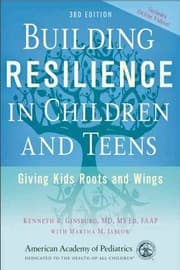
Cover of Building resilience in children and teens

Building resilience in children and teens

Kenneth R. Ginsburg, Martha M. Jablow

2005

Confronting the overwhelming amount of stress kids face today, this invaluable guide offers coping strategies for facing the combined elements of academic performance, high achievement standards, media messages, peer pressure, and family tension. The handbook acknowledges that adolescents commonly survive stress by either indulging in unhealthy behaviors or giving up completely, and its suggested solutions are aimed at strengthening resilience. The proposed plan enables kids from the age of 18 months to 18 years to build the seven crucial "C's"--Competence, confidence, connection, character, co.

Published 2005
Books like Building resilience in children and teens

Frequently Asked Questions

Which is easier to read: Building resilience in children and teens or The parent survival guide?
Reading difficulty depends on your familiarity with the genre. Check each book's page count and subject matter above, and start with whichever aligns better with books you've enjoyed before.
Can I read Building resilience in children and teens and The parent survival guide in any order?
Yes — these are standalone works. You don't need to read one before the other unless they're part of the same series.
Which book is better for beginners?
If you're new to this genre, look at the shorter book with broader appeal and start there. You can always come back for the other.

Are you an author? Promote your book or submit a free listing.

Affiliate Disclosure: As an Amazon Associate, we may earn from qualifying purchases. Book links on this page may be affiliate links. This does not affect our recommendations or the price you pay.